Ornamental Iron Gates in Carlsbad, CA
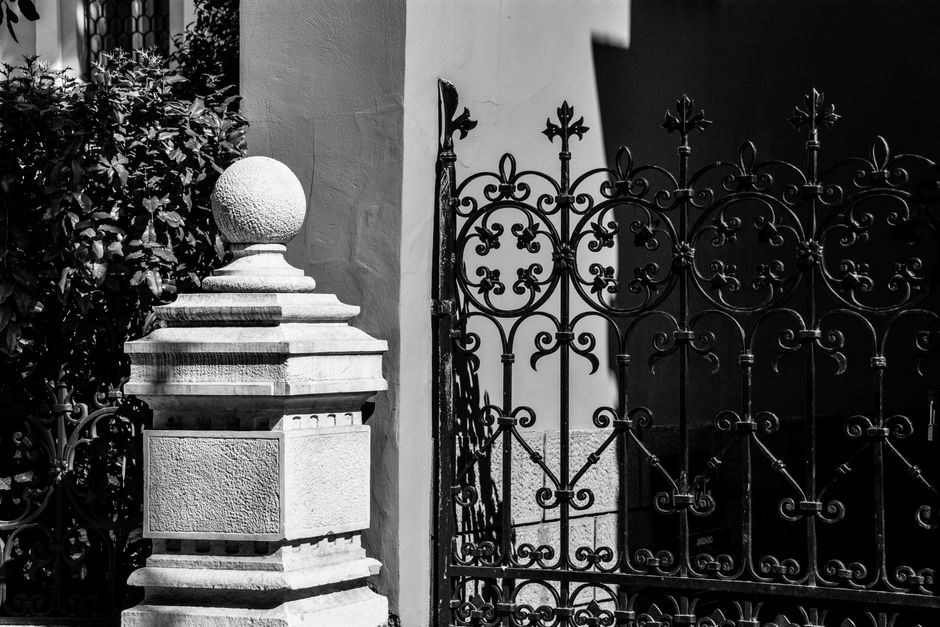
Plain answers about ornamental iron gates in Carlsbad, CA: how salt air and the marine layer affect metal, which materials and finishes hold up, and how to judge quality before you commit to a gate.
What We Cover
- Which Gate Material Holds Up Best in Salt Air Steel, true wrought iron and aluminum compared for homes exposed to ocean air near Carlsbad State Beach and the lagoons.
- When Is the Best Weather to Paint or Install an Iron Gate How the coastal marine layer, dew and temperature affect field painting, touch up and concrete work on iron gates.
- Why Iron Gates Rust and Sag and How to Fix Them Common causes of rust bubbles, sagging leaves and dragging latches on coastal iron gates, and the repairs that last.
- How Galvanizing and Powder Coating Protect an Iron Gate What hot dip galvanizing and powder coat each do, why they are often combined, and how the marine layer tests a finish.
- How to Tell a Well Built Iron Gate From a Poor One Welds, joints, drainage, hardware and finish details that show whether an ornamental iron gate is built to last.
- How to Prepare Your Property for a New Iron Gate Measuring openings, checking slope and swing space, and planning posts before an ornamental iron gate is built.
Ornamental Iron Gates in Carlsbad, CA
Salt air is the main threat to an iron gate in Carlsbad. Homes near Carlsbad State Beach, Agua Hedionda Lagoon and Batiquitos Lagoon get salt-laden air on the daily breeze, and that salt settles on every bar, hinge and latch.
The marine layer makes the problem worse. Low cloud and fog keep metal surfaces damp for long stretches, so salt stays dissolved on the steel instead of drying and blowing off.
Why the Label Matters Less Than the Coating
Most gates sold as wrought iron today are mild steel, so corrosion protection matters more than the name on the order form. True wrought iron is rarely made now, and the bar, tube and square stock in a typical fabrication shop is rolled steel.
Mild steel rusts wherever bare metal meets moisture and salt. How long a gate stays sound depends on the coating system, the quality of the welds and whether water can drain out of every hollow section.
The Coastal Strip Is the Hard Case
The narrow band of homes along the coast of San Diego County sees the heaviest exposure. Oceanside to the north and Encinitas to the south share the same conditions, and the stretch west of Interstate 5 is a useful reference point for where salt and dampness are most constant.
A gate in that band needs more from its finish than one set farther inland. Hardware, fasteners and cut ends matter as much as the large flat surfaces.
Where Gates Fail First
Gates usually fail where water collects. Open tube ends, the bottoms of pickets, hinge pockets, weld seams with gaps and the base of each post hold moisture long after the surrounding metal has dried.
Sagging is a separate failure with its own causes. Heavy leaves on undersized posts, loose hinges and footings that have shifted all pull a gate out of square, and rust at the joints speeds that up.
Guides
The guides on this site cover six topics: which gate material holds up best in salt air, how galvanizing and powder coating protect an iron gate, and how to prepare your property for a new gate. They also explain the best weather for painting or installing, why iron gates rust and sag and how to fix them, and how to tell a well built gate from a poor one.
Latest Guides
Automatic Opener for an Existing Iron Gate in Carlsbad
2026-10-26
Most existing ornamental iron gates in Carlsbad can take an automatic opener, but the answer depends on the gate you already have, not on the opener you want. Posts, hinges, slope, and coastal corrosion decide whether the conversion lasts a decade or fails in a season. Checking those four things before buying anything saves the most money and frustration.
Start With the Hand Test

Open and close the gate slowly by hand. It should move with light, even effort through its whole arc. If it binds, drags, or has a heavy spot, fix that first. An opener amplifies existing problems; it does not cure them. Automating a sticky gate just gives the motor the job of fighting friction every day until the gearbox gives up.
Sag is the most common culprit. Measure the gap under the latch end and compare it to the gap at the hinge end. A gate that drops at the free end will scrape, strain the operator, and stop short of its true closed position. Sag usually traces back to one of three causes: worn hinges, a weak post, or a frame that has racked out of square. Each has a different repair, and none of them is solved by bolting on an arm.
Inspect the Hinge Post

An operator pushes and pulls on the post every time the gate cycles. That repeated force is harder on a post than a person swinging the gate now and then. Grab the gate and shake it. If the post moves, it needs reinforcement or replacement before any bracket goes on.
Different post types raise different concerns:
- Thin hollow tube posts can flex under operator load, which changes the gate's travel over time.
- Masonry or stucco pillars need solid anchoring into the core. Ordinary surface fasteners into stucco or veneer will not hold, so the bracket has to reach structure behind the finish.
- Wide pillars may force a different arm style, since the hinge can sit far from the face where the operator needs to mount.
Look for Hidden Rust
Tap along the bottom rail and at the joints where pickets meet rails. Iron that has rusted from the inside can look sound and still crack under the new load at a bracket. Older gates close to the coast are the most likely to hide this, so it is worth a careful look before drilling anything.
Match the Operator to the Gate
Operators are rated by gate weight and leaf length. A long leaf needs more capacity even when it is light, because it multiplies the leverage against the arm. Weigh or estimate the gate, measure each leaf's width, and choose from there. A bigger, more powerful operator is not automatically the better choice, but an undersized one on an oversized leaf wears out its motor and gearbox early.
Common swing gate styles include:
- Linear actuators, a piston style arm, which suit many residential iron gates.
- Articulated arms, which work where the post is wide or the hinge sits far from the pillar face.
- Underground operators, which hide below the hinge but need a buried housing with good drainage.
Slide gates use a different setup entirely, with a track or cantilever and a separate operator type. A swing gate cannot simply be converted to slide operation with a different motor.
Slopes and Clearance in Carlsbad
Many driveways here rise or fall from the street, especially in hillside areas such as La Costa and parts of Rancho Carrillo. A leaf that swings uphill can hit the pavement. Walk each leaf through its arc by hand and watch the bottom rail. If clearance is tight, the options include rising hinges, opening the gate outward, or switching to a slide gate.
Also confirm the gate can open fully without meeting cars, walls, landscaping, or trash bins. An automatic gate does not pause for an obstacle the way a person would unless sensors are installed and working.
Safety Hardware Is Not Optional
The operator's built in force sensing is a backup, not a substitute for proper entrapment protection. A sound setup includes photo eye sensors across the opening, plus contact edges or a second set of eyes anywhere a person could be caught between the gate and a wall or post.
Two pinch points deserve special attention:
- The hinge side of a swing gate, where the leaf and post close like scissors. Keep children away and consider guards or panels to reduce exposure.
- Open picket slide gates, where a hand or arm can reach through and be drawn toward the roller or end post. Fine mesh or a solid panel on the lower section and along the travel path reduces the risk.
Every automated gate also needs a working manual release for power outages and motor failures. Find it, learn how it works, and test it before the day you need it.
Power: Hardwired or Solar
Hardwired low voltage from the house is the most reliable choice. Solar is workable in Carlsbad's mild climate, but marine layer mornings and a shaded mounting spot cut charging. If solar is the plan, size the panel and battery for gray weeks rather than sunny ones, and add battery backup either way.
Salt Air Changes the Hardware List
Homes near the beaches and the lagoons, including Batiquitos, Agua Hedionda, and Buena Vista, see faster corrosion on brackets, fasteners, and operator housings. Stainless or hot dip galvanized hardware helps, and sealed or well gasketed enclosures are worth seeking out. Neither is immune to salt air, so expect to inspect them over time.
Drilling the gate for brackets breaks the paint or powder coat. Prime and seal every new hole, cut edge, and weld right away. Rust on coastal iron typically starts at these breaks and creeps under the surrounding finish.
Small Details That Prevent Big Failures
- Sprinklers: Keep heads off the operator and control box. Overspray carries minerals, corrodes terminals, and can short boards.
- Ants: They commonly nest in warm gate control boxes in Southern California. Plug cable entry points and check inside periodically.
- Stops and locks: A positive stop keeps leaves from overtraveling and stressing the arm. An electric or magnetic lock helps hold leaves closed, which matters in Santa Ana wind events, especially if the iron has privacy panels that catch wind. An automatic gate is not secure on its own without a lock or stop.
- Access controls: Plan for remotes, a keypad, a phone app, or an intercom, plus a free exit loop or sensor so departing cars do not need a remote. Mount keypads where a driver can reach them without leaving the car or sitting in the gate's path.
HOA Review Comes First
In communities such as Aviara or La Costa, check with the association before choosing equipment. Many have architectural review for visible exterior changes, and approval can affect operator style, color, or keypad placement. Getting that answer early avoids buying an operator that has to be returned.
Keeping It Working
Once the opener is in, a short routine keeps it dependable:
- Monthly: Test the safety reversal. Place a sturdy object, such as a cardboard box, in the gate's path. The gate should stop and reverse. If it does not, stop using the automatic function until it is serviced.
- Every few months: Wipe the photo eye lenses. Coastal fog and dew leave salt and grime films that cause false triggers or missed detections.
- Yearly: Lubricate the hinges and check fasteners. Tighten loose bolts at the operator brackets, since vibration loosens them and a loose bracket changes the gate's travel. On slide gates, also clean the track and rollers.
An existing iron gate that swings freely, hangs square, and sits on a solid post is a good candidate. One that fails any of those checks is still often salvageable, but the repair comes first and the opener second.
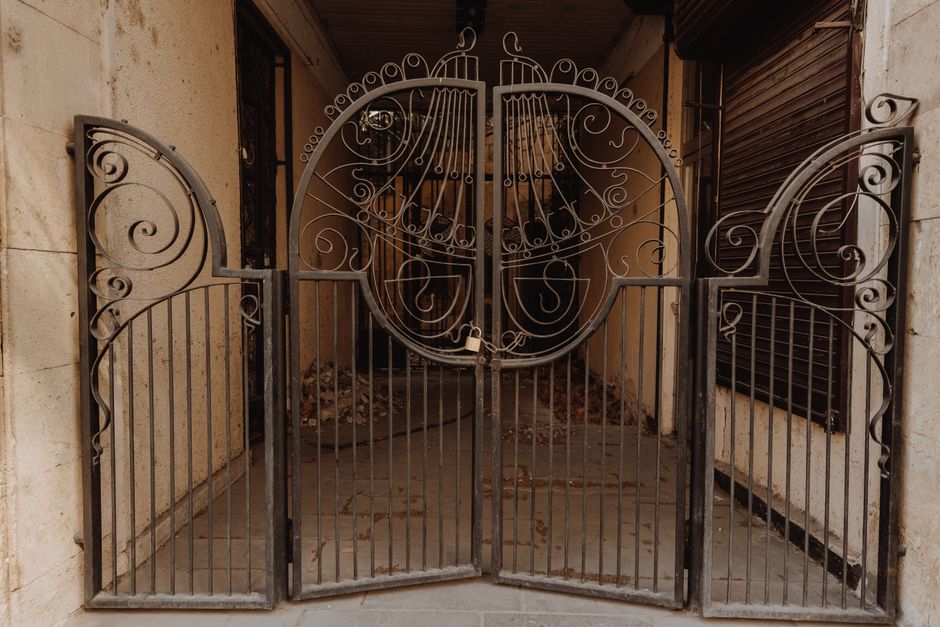
Iron Gate Child and Pet Safety in Carlsbad
2026-10-26
An iron gate becomes safe for small children and pets when every opening is too small to pass a head or body through, nothing on it works as a ladder, and it closes and latches by itself every time. Height and a latch alone do not do that. Reach, gaps, climbable ornament and latch reliability all matter, and each one can be checked with a tape measure, a ball and a few minutes of testing.
Measure the Gaps First

Measure the space between every pair of pickets at its widest point. That includes the spots where pickets flare, twist or meet scrollwork, because the widest point is the one a child finds. A gap a toddler can push a head or torso through is an entrapment and strangulation risk. Many fabricators aim for openings no larger than about 4 inches as a practical target for small children and small dogs.
Then check the space under the gate at several points along its swing. Pavers settle, soil washes out and gates sag, so a bottom gap that was tight at install can open wide enough for a small dog to squeeze or dig under. A lower bottom rail or a concrete or paver threshold closes it.
Decorative loops, circles and scroll openings need their own test. Hold a ball about the size of a small child's head against each opening. If it passes through, the ornament is an entrapment point. A welded insert or a backing panel fills it.
Remove the Ladder

Look at the gate the way a climber would. Horizontal rails, decorative rings and scrolls on the child's side work like rungs. Keep horizontal members on the outside of a pool or play area, or cover the lower section with a mesh panel on the child's side.
A taller gate does not solve this by itself. Climbable ornament and nearby objects defeat height. Planters, pool equipment, benches, trash bins and trellises near the fence line give a child or a jumping dog a step up and over a gate that is otherwise too tall to climb. Move them well away.
Round the Tops and Smooth the Edges
Spear points and sharp finials look good on ornamental iron, but they can puncture, and they catch collars, harnesses and clothing. If kids play nearby or a dog jumps at the gate, swap them for rounded caps, balls or a flat top rail.
Run a gloved hand along all edges, cut ends and weld beads at child height. Burrs and rough grinding marks cut small hands and paws. File or grind them smooth, then touch up the paint so the bare metal does not start rusting.
Check the Hinge Side for Pinch Points
As a gate closes, the gap between the gate and the hinge post narrows, and that is where small fingers and paws get crushed. Hinge guards reduce the risk, and so does a hinge style that keeps the gap consistent through the whole swing. Watch the gate move at child height and look at what narrows.
Make the Latch Work Every Time
A self-latching latch, either gravity or magnetic, is the standard for gates around children and pets. Mount the release high or on the inside where small children cannot reach it. Then test it honestly: let the gate close gently from a few different angles. A latch that only catches when the gate is slammed will fail when it matters.
Shield the latch as well. A child or a clever dog can reach through the pickets and lift a latch from the other side. A solid plate or fine mesh around the latch area stops that.
Self-closing hinges and springs need the same test. Open the gate fully, halfway and just barely, and let go each time. It should close and latch on its own from all three positions, not only from wide open.
Control How Hard the Gate Closes
A spring alone can slam a gate hard enough to crush fingers or catch a pet's tail. An adjustable hydraulic closer lets the gate close at a controlled speed and still latch. Gusty, dry offshore wind episodes in inland Carlsbad neighborhoods can swing a gate hard, so a controlled close helps there too.
Springs and closers are not set and forget. They weaken, need tension adjustment and corrode, especially near the coast. Recheck them on a regular schedule.
Pick the Right Swing Direction
Pool gates should swing outward, away from the pool, so a child pushing on the gate pushes it closed rather than open. For a dog area, hang the gate so a dog leaning on it from inside presses it against its stop instead of pushing it open.
Watch for Sag and Weak Posts
A sagging gate drops the latch out of line with the strike, so it stops self-latching even though it looks closed. Signs include a scraping bottom edge, a latch that must be lifted to engage, and uneven gaps along the sides. A diagonal brace, a turnbuckle kit or a re-anchored hinge post usually fixes it.
Check the hinge post itself. In Carlsbad many gates hang from posts anchored into stucco-covered block walls or set in concrete. Push hard on the closed gate. Any movement at the post means the anchors are failing and the gate will keep sagging until the post is repaired.
Push and pull on every picket too. A cracked weld lets a picket rotate or work loose, which can widen a gap or leave a detached bar with a sharp end. Rust often hides weld failures at the bottom rail, where water sits.
Treat Coastal Rust as a Safety Problem
Near the coast, including the Village, Terramar and homes near the Agua Hedionda and Batiquitos lagoons, salt air and the marine layer keep iron damp and salty. Check hinges, springs and latches more often there than inland. Rinse hardware with fresh water now and then and lubricate hinge pins and latch mechanisms.
Rust is more than cosmetic. Flakes and pitting create sharp edges, pickets weaken at the base, and latches and springs seize. Wire brush or sand to sound metal, prime with a rust-inhibiting primer, then topcoat. Painting over rust does not stop it, because rust left under paint keeps spreading and lifting the finish. Hot-dip galvanizing under the finish holds up best for coastal homes. Powder coating alone does not make iron rustproof, since chips, scratches and cut edges still rust from underneath.
Mind Heat, Old Paint and Mixed Metals
Dark iron in full sun gets hot enough to hurt small hands and paws. That matters most on sunny afternoons in inland parts of Carlsbad and on south and west facing gates. Lighter finishes or shade over the latch area help.
On an older gate with many layers of paint, assume the paint may contain lead until it is tested. Test before sanding, especially if young children or pets touch or chew the gate.
When adding mesh or welded wire to the lower section for small dogs, use stainless or coated fasteners. Zip ties break down in Southern California sun, so they are a stopgap and not a permanent fix. Dissimilar metals touching in damp, salty air corrode faster, so avoid bare steel pressed against galvanized or aluminum parts.
Automatic Driveway Gates
Test the obstruction reversal and photo eyes regularly with a box or similar object, never a person or pet. Sensors do not make it safe for children or pets to play near a moving gate, so teach kids that the gate is not a play area. Everyone in the household should also know how to use the manual release.
A Note on Coyotes
Homes backing onto canyons and open space see coyotes. A gap a small dog can slip through lets a pet wander out at dawn or dusk. Close the gaps and check latches before letting small pets out unsupervised, but do not rely on an iron gate alone to keep wildlife out.
A Monthly Walk-Around
A few minutes once a month catches most problems before they become hazards:
- Swing the gate open and let it close, and confirm it latches on its own.
- Check the bottom gap at several points along the swing.
- Push and pull the pickets and look for movement.
- Look for new rust at the hinges, latch and bottom rail.
- Confirm nothing climbable has been moved next to the gate.
If a check turns up a failing post, cracked welds or a closer that no longer controls the swing, those repairs call for a welder or gate fabricator. Until it is fixed, keep small children and pets away from that gate.
Nearby Service Areas
We also cover Austin wrought iron gates.