Iron Gate Child and Pet Safety in Carlsbad
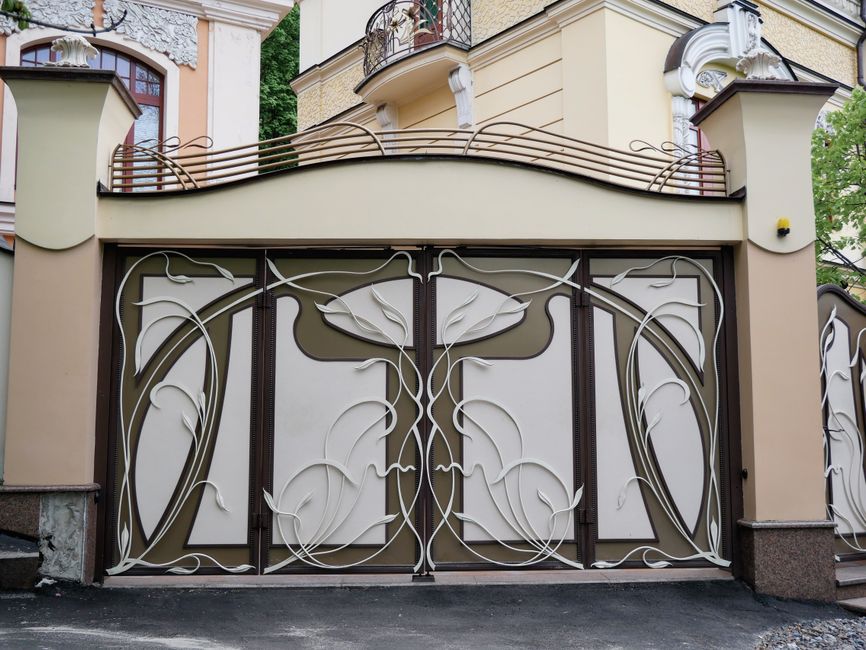
An iron gate becomes safe for small children and pets when every opening is too small to pass a head or body through, nothing on it works as a ladder, and it closes and latches by itself every time. Height and a latch alone do not do that. Reach, gaps, climbable ornament and latch reliability all matter, and each one can be checked with a tape measure, a ball and a few minutes of testing.
Measure the Gaps First

Measure the space between every pair of pickets at its widest point. That includes the spots where pickets flare, twist or meet scrollwork, because the widest point is the one a child finds. A gap a toddler can push a head or torso through is an entrapment and strangulation risk. Many fabricators aim for openings no larger than about 4 inches as a practical target for small children and small dogs.
Then check the space under the gate at several points along its swing. Pavers settle, soil washes out and gates sag, so a bottom gap that was tight at install can open wide enough for a small dog to squeeze or dig under. A lower bottom rail or a concrete or paver threshold closes it.
Decorative loops, circles and scroll openings need their own test. Hold a ball about the size of a small child's head against each opening. If it passes through, the ornament is an entrapment point. A welded insert or a backing panel fills it.
Remove the Ladder

Look at the gate the way a climber would. Horizontal rails, decorative rings and scrolls on the child's side work like rungs. Keep horizontal members on the outside of a pool or play area, or cover the lower section with a mesh panel on the child's side.
A taller gate does not solve this by itself. Climbable ornament and nearby objects defeat height. Planters, pool equipment, benches, trash bins and trellises near the fence line give a child or a jumping dog a step up and over a gate that is otherwise too tall to climb. Move them well away.
Round the Tops and Smooth the Edges
Spear points and sharp finials look good on ornamental iron, but they can puncture, and they catch collars, harnesses and clothing. If kids play nearby or a dog jumps at the gate, swap them for rounded caps, balls or a flat top rail.
Run a gloved hand along all edges, cut ends and weld beads at child height. Burrs and rough grinding marks cut small hands and paws. File or grind them smooth, then touch up the paint so the bare metal does not start rusting.
Check the Hinge Side for Pinch Points
As a gate closes, the gap between the gate and the hinge post narrows, and that is where small fingers and paws get crushed. Hinge guards reduce the risk, and so does a hinge style that keeps the gap consistent through the whole swing. Watch the gate move at child height and look at what narrows.
Make the Latch Work Every Time
A self-latching latch, either gravity or magnetic, is the standard for gates around children and pets. Mount the release high or on the inside where small children cannot reach it. Then test it honestly: let the gate close gently from a few different angles. A latch that only catches when the gate is slammed will fail when it matters.
Shield the latch as well. A child or a clever dog can reach through the pickets and lift a latch from the other side. A solid plate or fine mesh around the latch area stops that.
Self-closing hinges and springs need the same test. Open the gate fully, halfway and just barely, and let go each time. It should close and latch on its own from all three positions, not only from wide open.
Control How Hard the Gate Closes
A spring alone can slam a gate hard enough to crush fingers or catch a pet's tail. An adjustable hydraulic closer lets the gate close at a controlled speed and still latch. Gusty, dry offshore wind episodes in inland Carlsbad neighborhoods can swing a gate hard, so a controlled close helps there too.
Springs and closers are not set and forget. They weaken, need tension adjustment and corrode, especially near the coast. Recheck them on a regular schedule.
Pick the Right Swing Direction
Pool gates should swing outward, away from the pool, so a child pushing on the gate pushes it closed rather than open. For a dog area, hang the gate so a dog leaning on it from inside presses it against its stop instead of pushing it open.
Watch for Sag and Weak Posts
A sagging gate drops the latch out of line with the strike, so it stops self-latching even though it looks closed. Signs include a scraping bottom edge, a latch that must be lifted to engage, and uneven gaps along the sides. A diagonal brace, a turnbuckle kit or a re-anchored hinge post usually fixes it.
Check the hinge post itself. In Carlsbad many gates hang from posts anchored into stucco-covered block walls or set in concrete. Push hard on the closed gate. Any movement at the post means the anchors are failing and the gate will keep sagging until the post is repaired.
Push and pull on every picket too. A cracked weld lets a picket rotate or work loose, which can widen a gap or leave a detached bar with a sharp end. Rust often hides weld failures at the bottom rail, where water sits.
Treat Coastal Rust as a Safety Problem
Near the coast, including the Village, Terramar and homes near the Agua Hedionda and Batiquitos lagoons, salt air and the marine layer keep iron damp and salty. Check hinges, springs and latches more often there than inland. Rinse hardware with fresh water now and then and lubricate hinge pins and latch mechanisms.
Rust is more than cosmetic. Flakes and pitting create sharp edges, pickets weaken at the base, and latches and springs seize. Wire brush or sand to sound metal, prime with a rust-inhibiting primer, then topcoat. Painting over rust does not stop it, because rust left under paint keeps spreading and lifting the finish. Hot-dip galvanizing under the finish holds up best for coastal homes. Powder coating alone does not make iron rustproof, since chips, scratches and cut edges still rust from underneath.
Mind Heat, Old Paint and Mixed Metals
Dark iron in full sun gets hot enough to hurt small hands and paws. That matters most on sunny afternoons in inland parts of Carlsbad and on south and west facing gates. Lighter finishes or shade over the latch area help.
On an older gate with many layers of paint, assume the paint may contain lead until it is tested. Test before sanding, especially if young children or pets touch or chew the gate.
When adding mesh or welded wire to the lower section for small dogs, use stainless or coated fasteners. Zip ties break down in Southern California sun, so they are a stopgap and not a permanent fix. Dissimilar metals touching in damp, salty air corrode faster, so avoid bare steel pressed against galvanized or aluminum parts.
Automatic Driveway Gates
Test the obstruction reversal and photo eyes regularly with a box or similar object, never a person or pet. Sensors do not make it safe for children or pets to play near a moving gate, so teach kids that the gate is not a play area. Everyone in the household should also know how to use the manual release.
A Note on Coyotes
Homes backing onto canyons and open space see coyotes. A gap a small dog can slip through lets a pet wander out at dawn or dusk. Close the gaps and check latches before letting small pets out unsupervised, but do not rely on an iron gate alone to keep wildlife out.
A Monthly Walk-Around
A few minutes once a month catches most problems before they become hazards:
- Swing the gate open and let it close, and confirm it latches on its own.
- Check the bottom gap at several points along the swing.
- Push and pull the pickets and look for movement.
- Look for new rust at the hinges, latch and bottom rail.
- Confirm nothing climbable has been moved next to the gate.
If a check turns up a failing post, cracked welds or a closer that no longer controls the swing, those repairs call for a welder or gate fabricator. Until it is fixed, keep small children and pets away from that gate.